
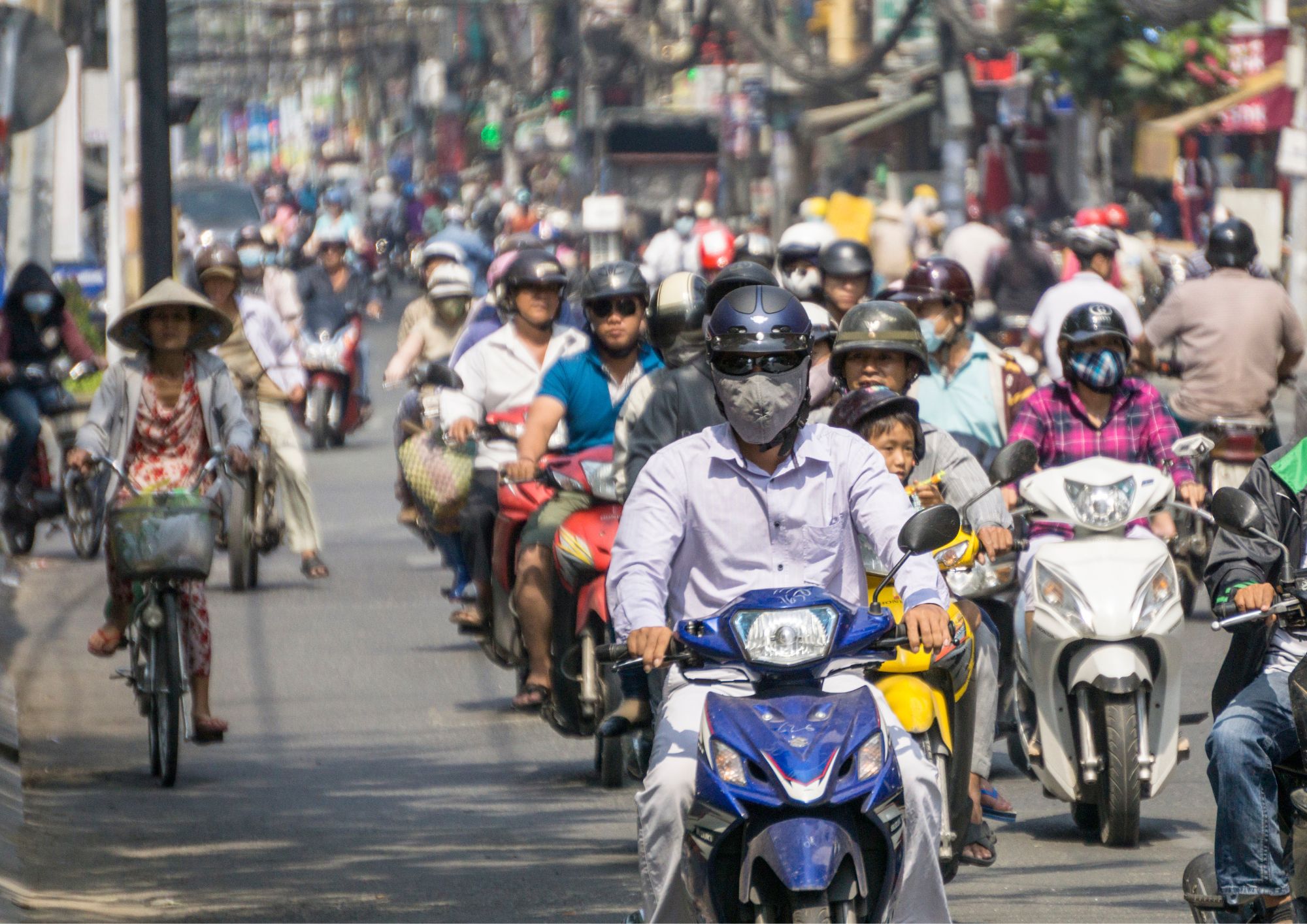
Crossing the road in Vietnam isn’t for the faint of heart. If you wait for a gap, you will never get to the other side, because there aren’t any
You step into the flow of motorcycles and keep moving. They adjust around you.
This works because the risk is symmetric; if a motorcyclist hits you, they are likely to get hurt, and their motorcycle could be damaged. They are strongly incentivized to avoid you.
Contrast that risk with the risk when stepping in front of a car. The driver is protected. You are not. The risk is asymmetric. And everything changes.
In business it is essential that you understand whether the risk to your business is symmetric or asymmetric
Many SMEs find themselves competing with much larger players and instinctively reach for the obvious lever: price.
But in an asymmetric fight, that’s dangerous. The larger competitor:
- has deeper cash reserves
- can cross-subsidize losses
- can afford to “wait you out”
They can lower prices without taking existential risk. You can’t.
We’ve seen how this ends.
People Express entered the US airline market with low fares and strong early growth.
Incumbents responded by matching prices. But they weren’t playing the same game:
- they had profitable routes elsewhere
- they had scale advantages
- they could absorb losses
People Express couldn’t. The asymmetry was fatal.
But here’s the more interesting question:
Why do some smaller players succeed anyway?
1. They avoid fighting where the asymmetry is strongest
Southwest Airlines didn’t go head-to-head on the same routes, with the same model.
They chose:
- secondary airports
- point-to-point routes
- a simpler operating model
They didn’t remove the asymmetry. They stepped out of its path.
2. They build a model incumbents struggle to copy
Ryanair went further.
Extreme cost discipline. Unbundled pricing. Relentless focus on efficiency.
Legacy airlines could copy parts of it.
But doing so would:
- damage their brand
- upset their customer base
- disrupt their internal economics
So they didn’t—at least not fully.
Ryanair turned asymmetry into an advantage.
3. They redefine what “value” means
JetBlue didn’t try to be the cheapest.
They offered:
- more space
- better in-flight experience
- a different brand promise
They weren’t cheaper. They were different in a way that mattered.
The pattern
Smaller players don’t win by “trying harder” in the same game.
They win by changing one of three things:
- Where they compete
- How they operate
- What customers value
The practical takeaway
If you’re competing with a larger player, ask yourself:
- Where is the asymmetry in this market?
- Are they protected in ways I am not?
- Am I stepping into a fight where they can absorb losses and I cannot?
And then the more important question:
What would it look like to compete in a way they can’t easily follow?
Because in business, as in Vietnam traffic: If you step into the road assuming everyone faces the same risks as you…you may be in more danger than you think.
Leave a Reply